What is planned
None of what is on this page is part of the system a tribunal would receive today. It is here so that a tribunal can see where the work is going.
An assistant for depositions
Reading a deposition for its dates and facts, and setting them in order against the grounds, is slow work. The assistant makes a first index for a person to check.
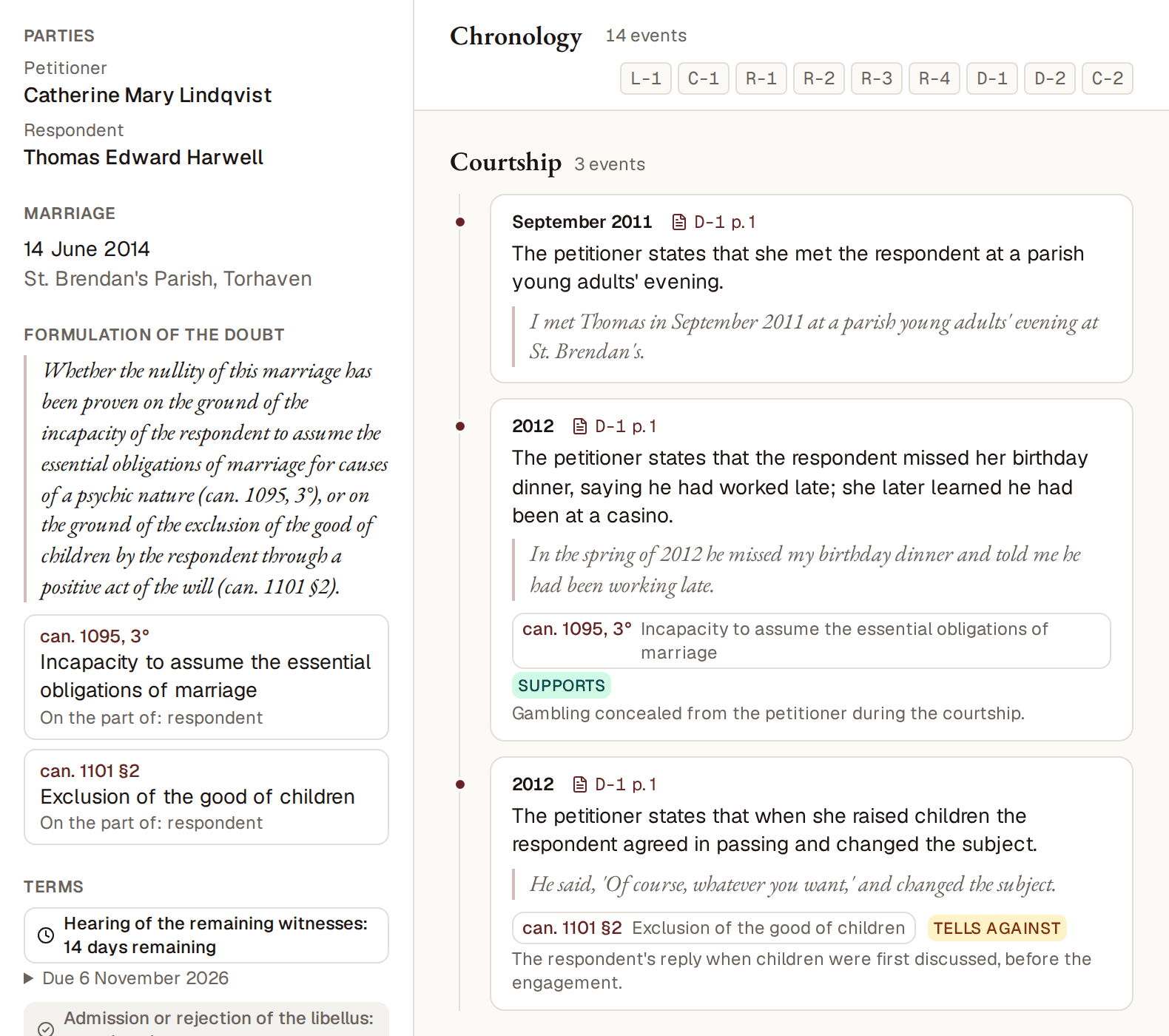
Given a deposition, it proposes entries for the chronology of the cause. Each entry is a date, a one-sentence statement of the fact, and beneath it the passage of the deposition that the fact was drawn from. It also notes which ground in the formulation of the doubt the fact bears on. A tribunal can choose to have it note as well whether the fact appears to support that ground or to tell against it. This second note is switched off unless a tribunal asks for it. It is switched on in the picture.
A working prototype exists and is being tested against invented depositions whose facts are known in advance. The picture shows the chronology it fills. In that picture the entries have already been accepted by a person.
How a person stays in charge of it
- Every proposal is accepted, corrected or rejected by a person, one at a time, with its passage in front of them. There is no way to accept them all at once.
- The passage shown is the deposition's own text. A quotation that cannot be found word for word in the deposition is discarded before anyone sees it.
- The statement of the fact, and any note of how it bears on a ground, are the assistant's wording. A person can change or remove either.
Where the deposition goes
The assistant is designed for a model that runs on a machine at the tribunal. The text of a deposition is sent to that machine and nowhere else. No deposition is sent to an AI company.
The screen names the machine the model is running on, so that this can be checked.
The machine needs a graphics card of the kind sold for workstations. Its specification will be published before the assistant is offered to any tribunal.
What it will not do
The assistant indexes what a deposition says. The optional note that a fact appears to support a ground goes a step beyond indexing, which is why it is left to each tribunal to turn on, and why a person must confirm or remove it.
It does not judge the credibility of a witness, weigh the proofs, propose a decision, or write a votum or a sentence. Those belong to the judges.
Also planned
- Bringing in the records of a tribunal's existing system.
- A single export of everything a tribunal has entered, in open formats, so that a tribunal that leaves loses nothing.
- For tribunals that want them: a petition form on the diocesan website, and payment online.
If something your tribunal needs is missing, say so.
See what works today
A demonstration shows the system as a tribunal would receive it now. Write to richard@lextribunalis.com, or use the form.